
UAE and Brazil Enter New Phase of 50-Year Strategic Partnership
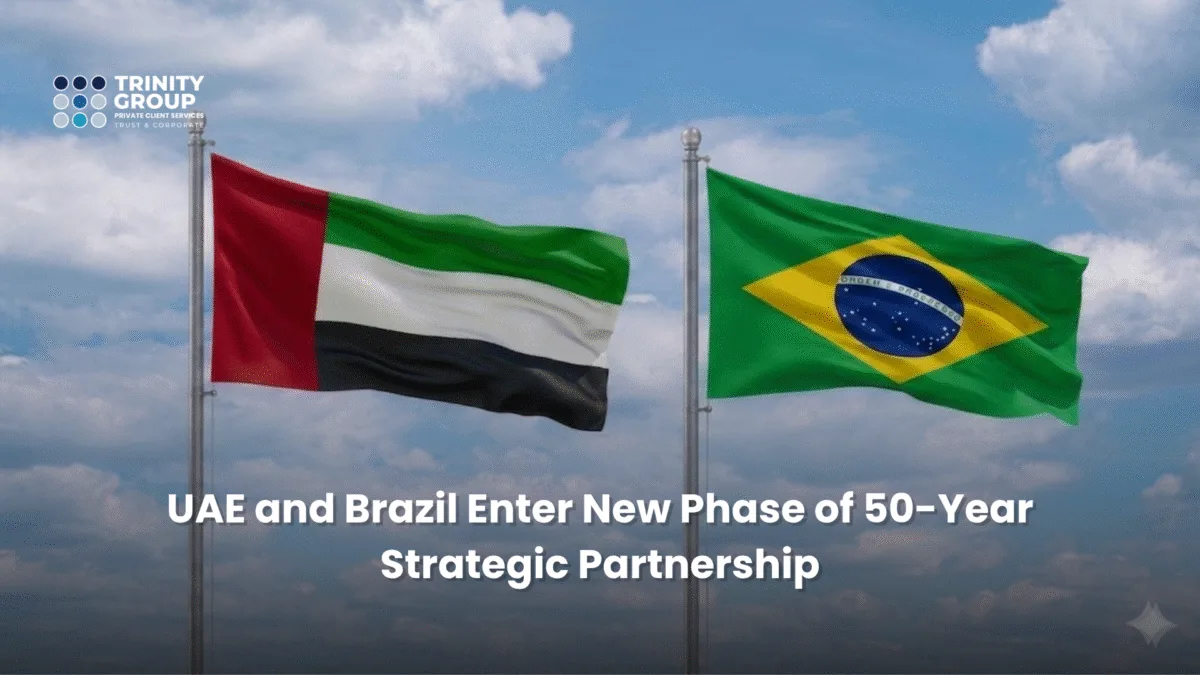
What the Latest High-Level Talks Signal for Bilateral Economic Cooperation
The United Arab Emirates and Brazil have strengthened their decades-long relationship following high-level discussions between His Highness Sheikh Mohamed bin Zayed Al Nahyan and Brazilian President Luiz Inácio Lula da Silva during the Brazilian leader’s visit to the UAE.
According to the report, the meeting underscored a shared commitment to advancing cooperation across economic and development sectors, further consolidating a strategic partnership that spans five decades.
The talks highlighted the importance both nations place on bilateral collaboration and long-term alignment.
Key Areas of Cooperation
The discussions reviewed progress across several sectors of mutual interest. These included:
- Renewable energy
- Sustainability initiatives
- Advanced technology
- Space
- Food security
- Education
- Logistics
The leaders emphasised that cooperation in these areas reflects shared national development priorities and a mutual interest in expanding practical collaboration.
The article also notes that Sheikh Mohamed expressed the UAE’s continued commitment to deepening ties with Brazil and conveyed appreciation for Brazil’s ongoing engagement with the Emirates.
Trade and Economic Integration
Particular attention was given to ongoing negotiations between the UAE and the Southern Common Market, Mercosur, toward a Comprehensive Economic Partnership Agreement (CEPA). While talks remain in their initial stage, both sides reportedly expressed hope that such an agreement could create further avenues for constructive economic cooperation.
The meeting comes amid broader efforts by both countries to enhance commercial links between the Gulf region and Latin America.
The article highlights that UAE–Brazil relations continue to grow in scope and depth, built on mutual respect and shared priorities in sustainable development and regional stability.
Diplomatic and Strategic Context
Beyond economic matters, the discussions addressed regional and international developments of mutual concern. The leaders emphasised their support for peace and stability in the Middle East and globally, reflecting the importance of diplomatic alignment within their broader partnership.
The Brazilian President was received at Qasr Al Shati in Abu Dhabi, accompanied by senior ministers and officials, underscoring the significance of the visit.
What This Signals for Businesses
While the article focuses on diplomatic developments, sustained government-level engagement typically supports long-term commercial confidence.
For businesses operating between the Middle East and Latin America, strengthened political and economic alignment can support:
- Greater institutional cooperation
- Improved commercial dialogue
- Enhanced confidence in bilateral engagement
As negotiations around broader trade frameworks continue, businesses may monitor developments closely, particularly in sectors such as renewable energy, food security, logistics, and advanced technology.
Trinity Group’s Perspective
At Trinity Group, we closely follow developments that influence international trade corridors and cross-border structuring considerations.
As bilateral relationships deepen, businesses exploring opportunities between the UAE and Brazil may require:
- Appropriate entity structuring in the UAE
- Regulatory and compliance alignment
- Corporate banking coordination
- Ongoing accounting and advisory support
Our role remains focused on ensuring that any structure established in the UAE is commercially justified, compliant with current regulations, and aligned with long-term operational objectives.
Looking Ahead
The continued strengthening of a 50-year strategic partnership reflects continuity rather than short-term diplomacy. As discussions around trade agreements and sector cooperation progress, the UAE–Brazil corridor may continue to evolve across energy, sustainability, logistics, and innovation.
For internationally active businesses, developments at state level often form the foundation for sustained private-sector engagement.
Careful planning, compliance-led structuring, and informed advisory support remain essential in translating diplomatic alignment into practical commercial opportunity.